Going to the toilet when you are out and about should be a simple task, right? Unfortunately, for many disabled people, that is not the case. Standard toilet cubicles are often too small, poorly equipped, or simply impossible to enter. This is why we rely on dedicated facilities, but what is it that actually makes public toilets accessible?
In this guide, we break down the different types of facilities you will find in the UK and the essential features that make them fit for purpose.
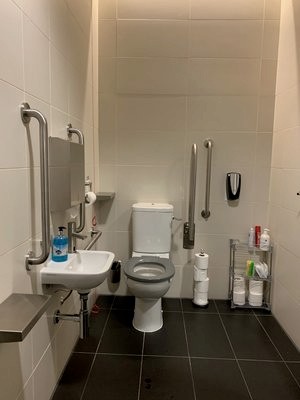
Example of accessible toilet
3 Types of Accessible Toilets in the UK
Not every accessible toilet is the same. Depending on your needs, you might look for one of these 3 common types:
1. Standard Accessible (Radar Locked)
This is the most common type of accessible toilet in the UK, with over 10,000 available across the country. These are single-room toilets designed to be opened with a Radar Key.
The System: You can buy a Radar Key from local councils or online. The goal is to ensure these toilets are kept clean and available for those who truly need them, rather than being used as extra storage or by the general public.
The Debate: While many people find comfort in knowing they have a key, others feel that basic human needs should not be "locked" behind a purchase.
2. Changing Places Toilets
Changing Places Logo
Changing Places are the "gold standard" for inclusion. These rooms are larger than standard accessible toilets and are kitted out with specialized equipment for those who cannot use standard facilities.
Key Features: They include a height-adjustable adult-sized changing bench, a tracking hoist system, and enough space for a disabled person and up to 2 carers.
Growth: There are now over 2,500 Changing Places toilets in the UK, a number that continues to grow every year.
3. Ambulant Toilets
These are often found at the end of a standard row of cubicles. While they are not large enough for a wheelchair to turn in, they are designed for people who use mobility aids like walking sticks or frames, or those who find it difficult to sit and stand. They typically feature grab rails and a slightly higher toilet seat.
Essential Features: What We Map at Sociability
When we assess what makes public toilets accessible, we look at the fine details. On the Sociability app, we map these 10 essential features so you can plan your trip with confidence:
Wide Doorways: A minimum width to allow for wheelchair and powerchair entry.
Turning Space: Enough room for a wheelchair user to perform a 180° turn.
Grab Rails: Both fixed and drop-down rails to help with transferring.
Emergency Assistance: A red pull cord that must reach all the way to the floor.
Colour Contrasted Seat: This helps people with visual impairments identify the toilet easily.
Clear Space Under Sink: This allows a wheelchair user to roll their knees under the basin.
Touch-Free Waste Bin: Essential for those with limited hand dexterity.
Full-Length Mirror: Positioned so it can be used by both standing and seated users.
Lowered Hanging Hooks: Hooks for coats or bags that are within reach of a seated person.
Correct Seat Height: Usually between 440mm and 500mm to make transferring safer.
FAQ: Finding and Using Public Toilets Accessible to You
1. How do I find my nearest accessible toilet?
The best way is to use the Sociability app. We provide photos and detailed tags for the features mentioned above, so you can see the layout for yourself before you arrive. This takes the access anxiety out of your day.
2. What should I do if an emergency cord is tied up?
This is a major safety hazard. If you see an emergency cord tied up or cut short, please untie it so it reaches the floor and inform staff that it can't be tied up. If a person falls, they need to be able to reach that cord from the ground to call for help.
3. Can I use an accessible toilet if my disability is "invisible"?
Yes. Accessible toilets are for anyone who needs the specific features they provide. Whether you have a stoma, a sensory processing disorder, or a condition that requires extra space or privacy, you have every right to use these facilities.
We would love to hear your thoughts on this post.
Planning a trip? Download the Sociability app to find accessible cafés, bars, and restaurants that meet your specific needs in seconds. You can also join our community and follow us on Instagram for the latest inclusive spots!
To take your advocacy further, sign up for our free newsletter, Beyond Compliance. We provide practical tips to help you champion accessibility in your workplace and everyday life. We look forward to seeing you there!
Sociability
Sociability is a disability-led social enterprise dedicated to making the world more accessible through accurate, verified data. Our team combines lived experience with technical expertise to help individuals and organisations navigate and improve accessibility information across the UK.